Excelling in Skilled OSCE: Strategies for Success
The Skilled OSCE (Objective Structured Clinical Examination) is a pivotal component of the ADC Part 2 Practical Exam. This guide from ADC Mehr Academy outlines clear strategies, common pitfalls, and practice-first methods to help you pass with confidence.

What Is the Skilled OSCE?
The Skilled OSCE evaluates your ability to perform clinical tasks in a simulated environment. Typical stations test restorative procedures, periodontal assessment, and patient communication under time constraints, with strict criteria for safety, quality, and documentation.
Why the Skilled OSCE Matters
- Demonstrate safe, reproducible clinical standards
- Show accuracy in preparation, isolation, and restoration
- Prove decision-making under timed conditions
Core Skills for Skilled OSCE Success
Restorative Procedures
Stations assess your ability to prepare and restore teeth accurately while protecting tooth structure and achieving stable occlusion.
- Example: For a Class II restoration, maintain proper cavosurface angles and use a matrix system that predictably produces tight contacts.
Periodontal Assessment
Identify diagnosis and treatment needs through pocket depth measurements, bleeding on probing, and risk-factor review.
- Example: Record 3–4 mm pockets with localized bleeding; recommend scaling and tailored oral hygiene instruction.
Patient Management & Communication
Explain procedures, risks, and benefits in plain language; confirm understanding and obtain informed consent.
- Example: “A root canal removes infection and preserves your tooth. Without it, pain and infection could persist.”
Expert Insights
- Tip 1: Build a repeatable workflow—setup → checklist → execute → verify → document.
- Tip 2: Slow is smooth, smooth is fast: protect margins and contacts before chasing speed.
How to Prepare for the Skilled OSCE
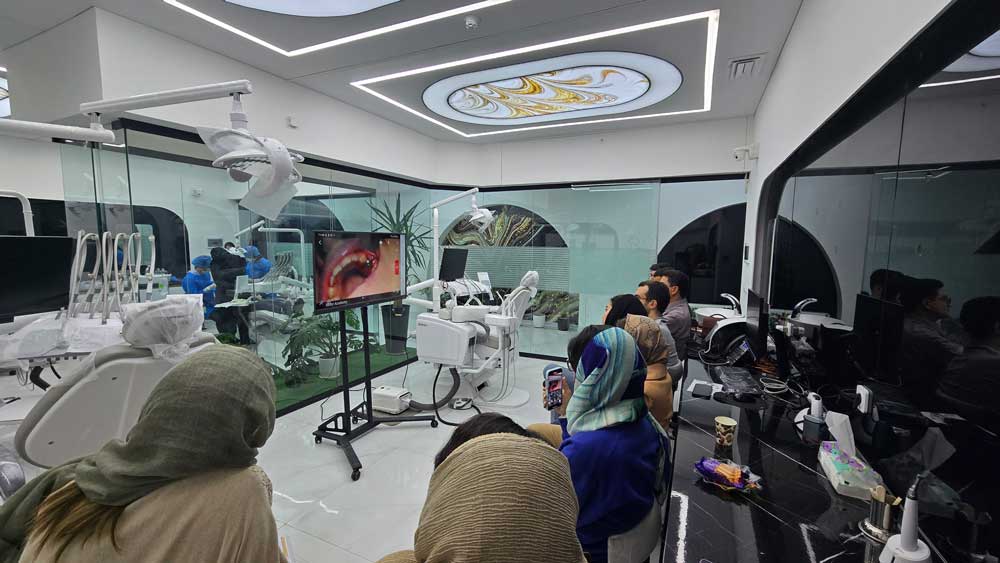
- Hands-On Practice: Use ADC-compatible typodonts and instruments; repeat stations with a timer.
- Infection Control: Rehearse glove changes, instrument flow, and surface decontamination until automatic.
- Mock Exams: Full run-throughs with marking checklists and post-case reflection.
- Time Management: Aim to finish with a 60–90s buffer for verification and documentation.
Comparison Table
| Task | Key Skill | Common Error | Practice Tip |
|---|---|---|---|
| Restorative Procedures | Precise cavity preparation | Incorrect cavosurface angle | Use a reliable matrix and check angles before restoration |
| Periodontal Assessment | Accurate pocket measurement | Missing bleeding on probing | Practise probing techniques and charting |
| Patient Management | Clear communication | Excessive jargon | Rehearse simple, patient-friendly explanations |
FAQs & Limitations
Common Questions
- What if I make a mistake? Correct it within the station and protect final quality; document your steps.
- How do I manage time pressure? Break the task into micro-steps and practise with timed checklists.
- What equipment is provided? Standard handpieces, matrices, burs, and typodont teeth aligned with ADC expectations.
Limitations
Manikin-based training is essential but not identical to treating patients. Practise across varied scenarios to improve adaptability.
Conclusion & Next Steps
Mastering the Skilled OSCE requires a repeatable workflow, attention to detail, and timed practice. Contact ADC Mehr Academy for structured coaching, mock OSCEs, and examiner-style feedback—or Enroll now to start your preparation.
Related Topics: See also ADC Technical Tasks Guide and Communication OSCE Preparation.