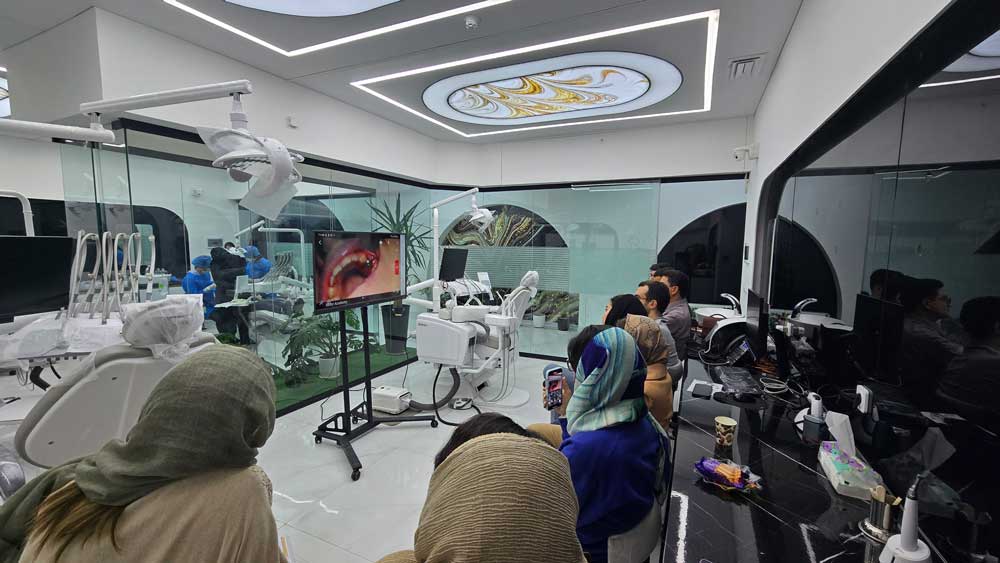
For overseas dentists aiming to practise in Australia, the Australian Dental Council (ADC) exams are a critical milestone. This guide explains the ADC Technical Tasks in plain language, with practical tips, checklists, and preparation strategies to help you pass confidently.
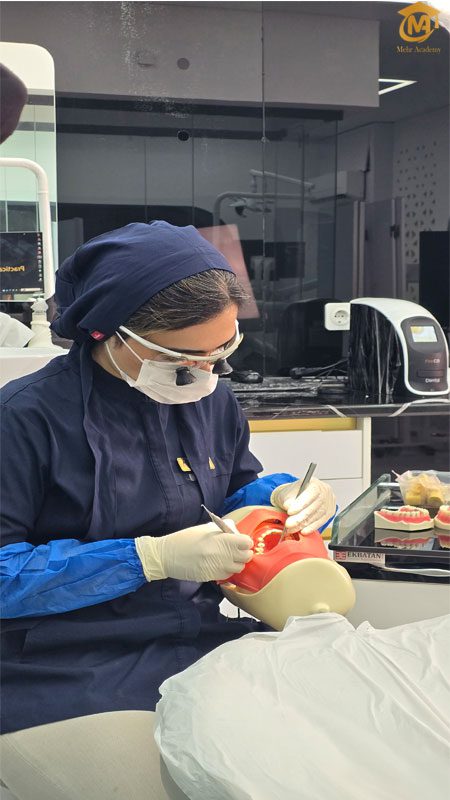
What Are ADC Technical Tasks?
The Technical Tasks are assessed in the ADC Part 2 Practical Exam to evaluate your ability to perform precise clinical procedures to an Australian standard. They typically include crown preparation, endodontic access cavity, and a Class II composite restoration, all completed under strict time and quality criteria.
Why Technical Tasks Matter
- Demonstrate safe, reproducible clinical standards
- Show precision in tooth preparation, isolation, and restoration
- Prove your clinical decision-making under time constraints
Core ADC Technical Tasks and Skills
Crown Preparation
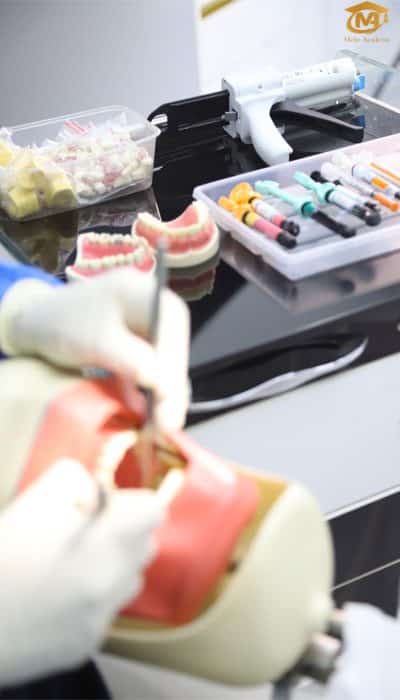
Prepare a tooth for a metal-ceramic crown with adequate occlusal and axial reduction, proper taper (total convergence), and a continuous finish line (often a shoulder with bevel or deep chamfer as specified).
- Key skills: Margin integrity, axial taper, functional cusp reduction, preservation of tooth structure
- Common errors: Under/over-reduction, unsupported enamel, irregular finish line
- Practice tip: Use loupes, pencil-mark your finish line, and verify reduction with a putty index
Endodontic Access Cavity

Create a conservative access cavity that enables straight-line access to the canals, preserves pericervical dentin, and avoids iatrogenic damage.
- Key skills: Canal location, straight-line access, conservation of tooth structure
- Common errors: Perforation, missed canals, over-enlargement
- Practice tip: Use Endo-Z for refinement and pre-op radiographs to anticipate canal morphology
Composite Restoration (Class II)
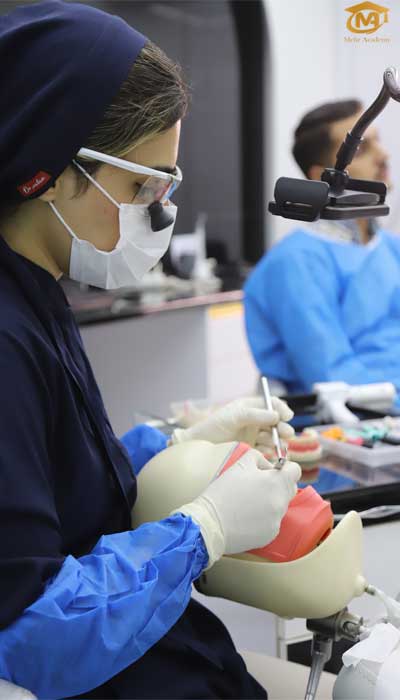
Restore a proximal lesion with proper isolation, a well-adapted matrix, and layered composite to achieve anatomical contours and tight interproximal contact.
- Key skills: Isolation, proximal contact, anatomical carving, finishing and polishing
- Common errors: Open contact, overhangs, high occlusion
- Practice tip: Use a sectional matrix system with a separation ring for predictable contacts
Expert Insights
- Dr. Manpreet Kaur: “Precision in technical tasks is non-negotiable—set a repeatable sequence and stick to it.”
- Dr. Sarah Niazi: “Most candidates lose marks on small errors. Slow down just enough to protect margins and contacts.”
How to Prepare for ADC Technical Tasks
- Hands-on drills: Repeat each task under timed conditions until your sequence is automatic
- Infection control: Rehearse a standardised setup and instrument flow
- Mock exams: Full run-throughs with marking rubrics and post-case reflections
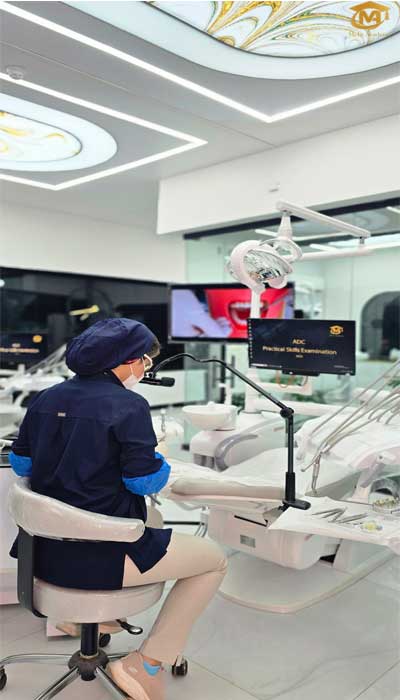
Comparison Table
| Task | Key Skill | Common Error | Practice Tip |
|---|---|---|---|
| Crown Preparation | Precise margin design | Undercutting | Use loupes and a mirror |
| Endodontic Access | Straight-line access | Perforation | Practise with Endo-Z bur |
| Composite Restoration | Tight proximal contact | Loose contact | Use sectional matrix band |
FAQs
- What if I make a mistake? Correct it within the time limit; focus on final quality and integrity.
- How to control exam anxiety? Simulate the exam environment, use checklists, and keep a consistent setup routine.
- What equipment should I use? ADC-approved tools and materials you’ve already practised with.
Conclusion
Mastering the ADC Technical Tasks is a pivotal step toward registration in Australia. With the right sequence, repetition, and feedback, you can meet the standard confidently and consistently.
Ready to Practise Like It’s Exam Day?
Join ADC Mehr Academy for structured coaching, timed simulations, and examiner-style feedback on all ADC technical tasks.